Ordering a sliding screen door with the wrong measurements is the most expensive way to learn that patio openings are rarely square. Whether you’re pricing a custom door or just want to give us accurate numbers for a quote, here’s how to measure a sliding screen door opening properly — the same way our technicians do it, with the traps that catch homeowners marked clearly.
What You’ll Need
- A metal tape measure (cloth tapes stretch and lie)
- Pen and paper — or your phone
- Two minutes with the old door still in place if possible
Step 1 — Measure the Height, Three Times
Measure the opening height on the left side, the middle, and the right side — from the surface the door rolls on (the bottom track) up to the underside of the top track’s channel. On older Toronto homes these three numbers frequently differ; houses settle. Record all three and use the smallest. A door sized to the tallest point jams at the shortest one; rollers have adjustment range to make up small differences at the tall end.
Step 2 — Measure the Width, Top and Bottom
Measure the width of the space the screen door occupies — from the edge of the fixed panel (or the jamb the screen closes against) to the far end of the screen’s track section, at both the top and the bottom of the opening. Again: keep the smaller number. If the two differ by more than about a centimetre, mention it when ordering — that’s a racked opening and a custom door can be built to behave in it.
Step 3 — Measure the Old Door Itself (If You Have It)
Frame width and frame height of the existing door, corner to corner, plus a diagonal from bottom-left to top-right and the opposite diagonal. Equal diagonals = the old door is square; unequal = the door (or the opening) is out of true, which is worth knowing before assuming the old door’s dimensions were ever correct. If the old door never slid well, don’t clone its measurements — see our guide on whether to repair or replace before buying anything.
Step 4 — Note the Details That Actually Cause Mis-Orders
- Which side does it slide? Stand outside, facing the door: note whether the screen is on the left or right track and which way it opens.
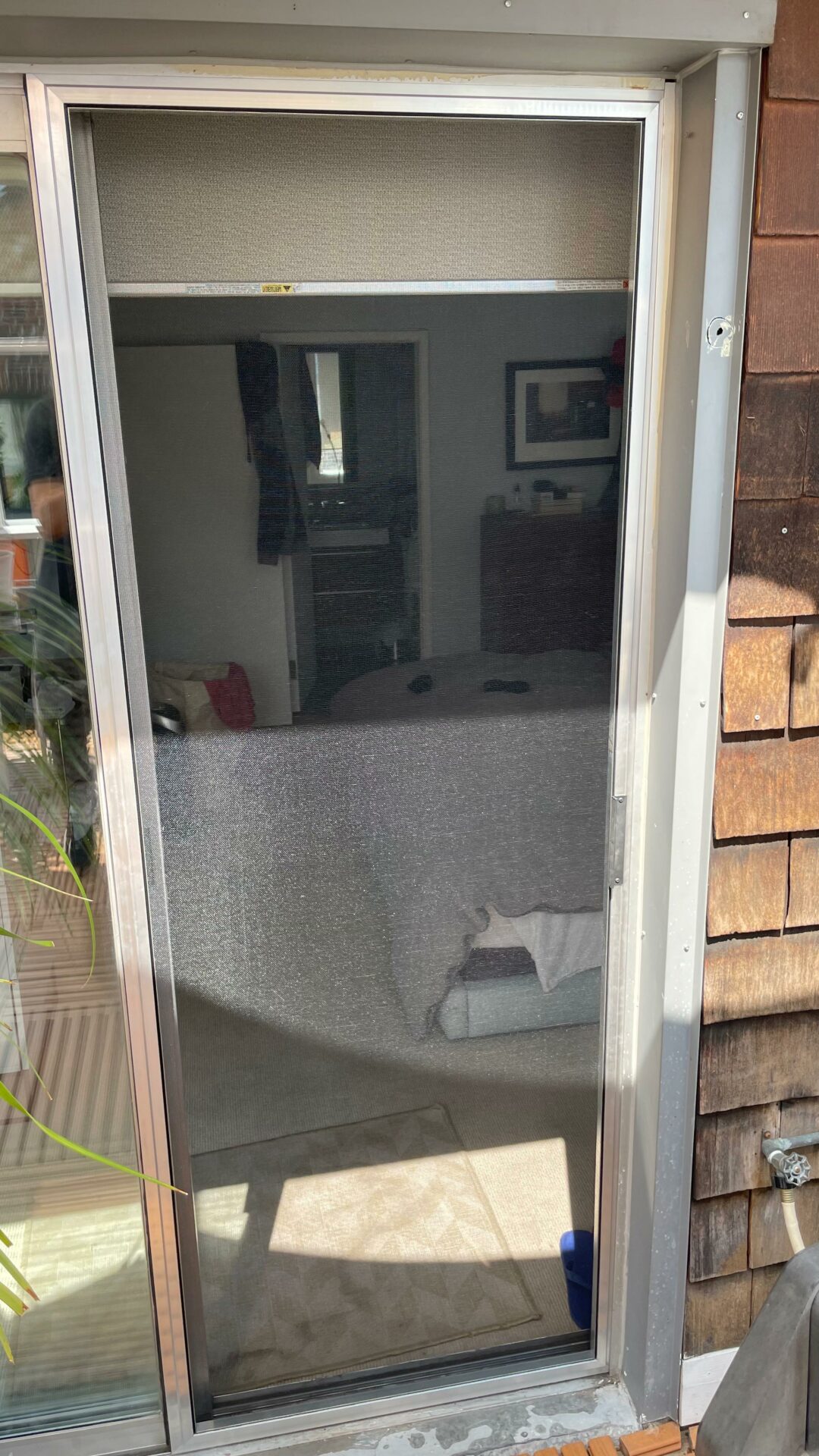
- Track style: does the door hang from the top (top-hung) or roll on the bottom rail? Photograph both tracks — a phone picture answers questions a sketch can’t.
- Handle height if you want it matched to the glass door’s handle.
- Mesh choice: this is the moment to upgrade — see our mesh comparison before defaulting to standard fibreglass.
The classic mis-measure is height taken in the middle only — the one spot the settling missed — on a door for an older house. The door arrives, fits beautifully for sixty centimetres, then binds. The second classic is measuring the old door instead of the opening when the old door was a trimmed-down universal that never fit right to begin with. When we quote a custom door, we measure the opening ourselves and stand behind the fit — so your numbers only need to be good enough for the estimate, not the cut.
Or: Let the Measurement Be Our Problem
Send your rough numbers with a free estimate request — they’re plenty for an accurate quote. If you order a door, a technician confirms every measurement on-site before anything is built, so the fit is on us, not you. Custom-measured sliding screen doors are our everyday work: patio doors, balcony doors, tall openings and the older frames that big-box sizes never fit.
Send rough measurements — we confirm on-site before anything is built.
Get a Free EstimateMeasuring FAQs
Do I measure the door or the opening?
The opening — it’s the truth the door has to live in. Measure the old door too if it’s available, but treat it as a cross-check, especially if it never slid well.
How accurate do my measurements need to be for a quote?
Within a centimetre is fine for pricing. Final measurements are taken by the technician on-site before a custom door is built.
My opening isn’t square. Can I still get a screen door that works?
Yes — that’s exactly what custom-measured doors are for. Roller height adjustment handles small variance, and a door built for your real opening handles the rest.
What if my door is an unusual size, like an older or extra-tall opening?
Custom means custom — tall balcony doors, narrow older openings and non-standard patio sliders are routine. That’s the main reason to skip universal big-box doors.
Should I measure in inches or centimetres?
Either — just never mix them in one set of notes, and say which you used. Photos of the tape against the opening remove all doubt.