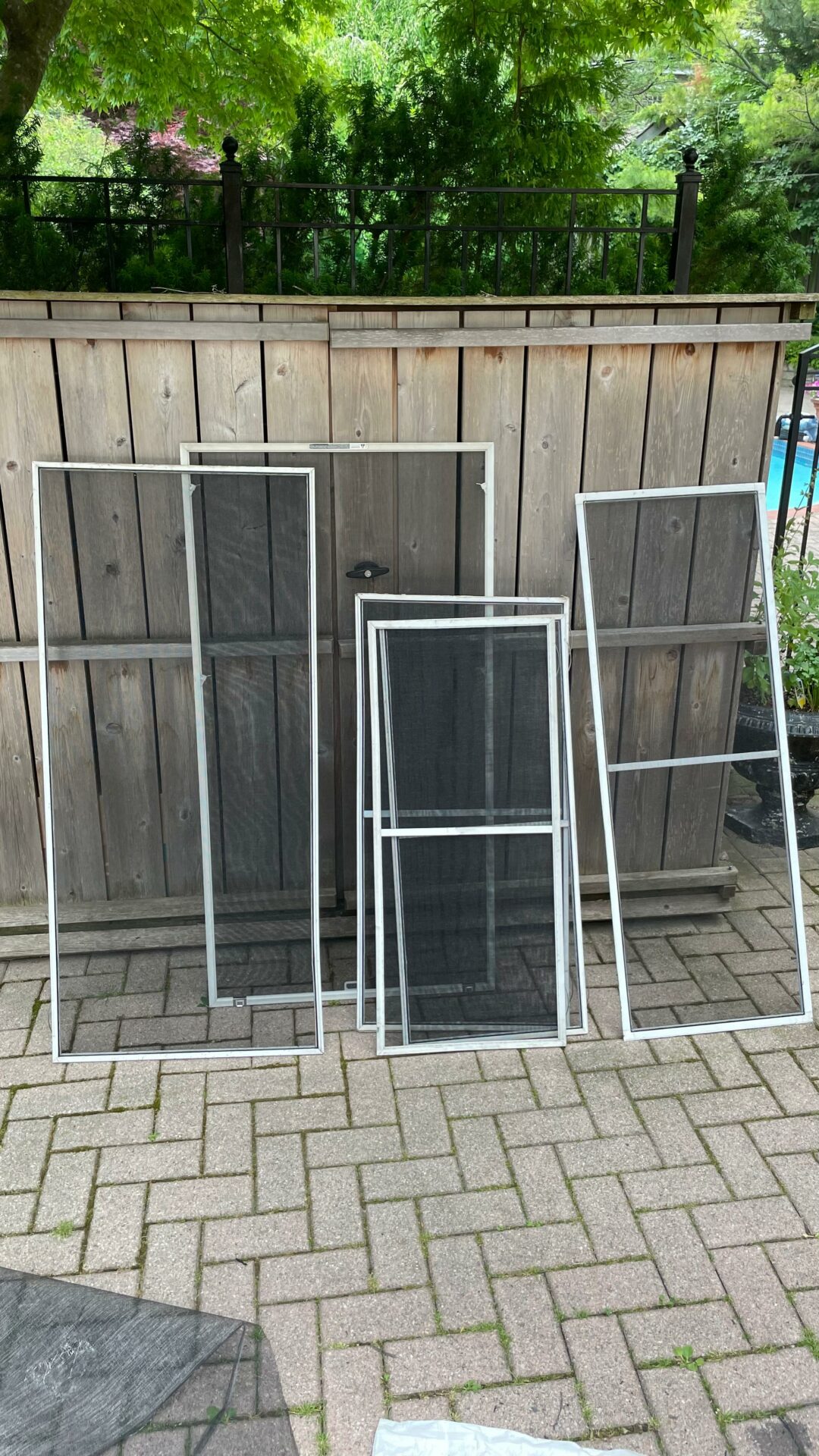
All screen mesh keeps bugs out. That’s where the similarity ends. The mesh you choose decides how well you see through your door, how much air moves on a July evening, whether the cat destroys it by August, and how many years pass before you’re re-screening again. Here’s the practical comparison we walk homeowners through on service calls across Toronto and the GTA — no catalogue fluff, just what each mesh is actually for.
Fibreglass Mesh — The Everyday Standard
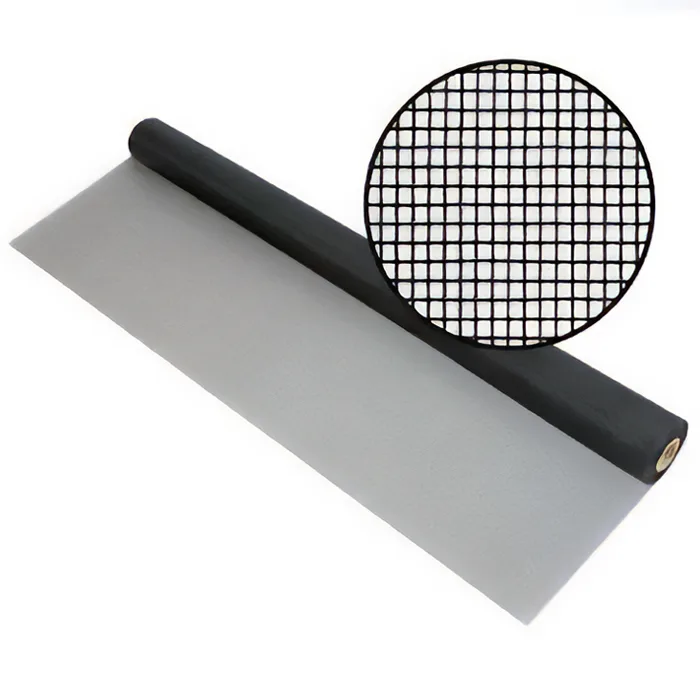
Charcoal fibreglass is what’s in most screen doors and windows, and for good reason: it’s the most affordable option, it doesn’t crease or dent, it’s easy to re-screen tightly, and the charcoal colour is the easiest to see through. Its weaknesses: it stretches and sags over years in the sun, and it’s the easiest mesh for pets and impacts to tear.
Choose it when: you want the economical, good-at-everything default for doors and windows without pets.
Aluminum Mesh — Stiffer, Tougher, Less Forgiving
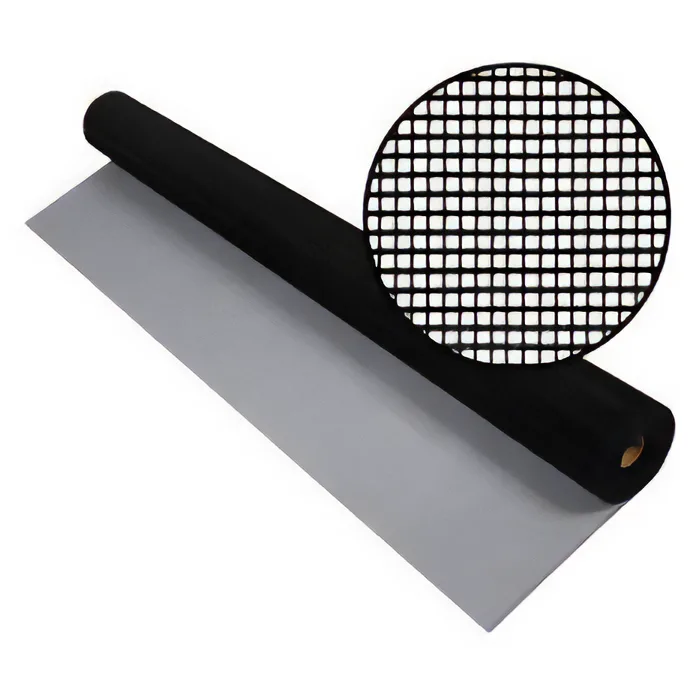
Aluminum wire mesh resists sagging and stands up better to poking and weather than fibreglass. The trade-offs: it costs more, it can glare in sunlight (charcoal-coated versions help), and once it creases or dents, the mark is permanent — you can’t smooth aluminum back out.
Aluminum also comes in a bright (silver) finish alongside the black coating — bright aluminum suits utility spaces; black stays easier on the eyes.
Choose it when: you want a screen that holds its shape for years on a door that gets weather but not pets.
Pet-Resistant Mesh — Seven Times the Fight
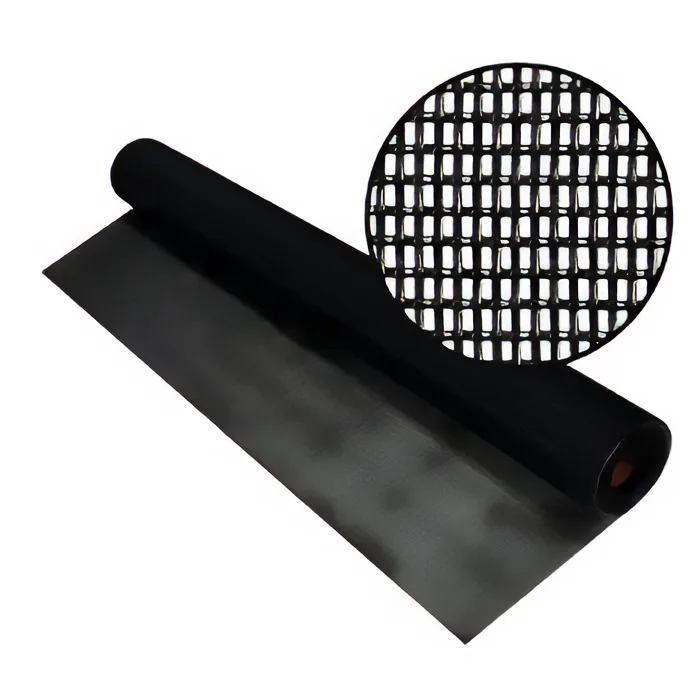
Pet screen is vinyl-coated polyester, woven heavier and tighter than standard mesh. It shrugs off claws, nose-bumps and the full-speed dog arrival that shreds fibreglass. It costs more and, because the strands are thicker, you trade a little visibility and airflow for the durability. If your screen door has been re-screened twice for the same reason and that reason has four legs, this is the answer — we wrote a full guide on it: pet-proof screen doors.
Choose it when: dogs, cats, or kids’ traffic keep destroying standard mesh.
No-See-Um (Fine) Mesh — For the Tiny Biters
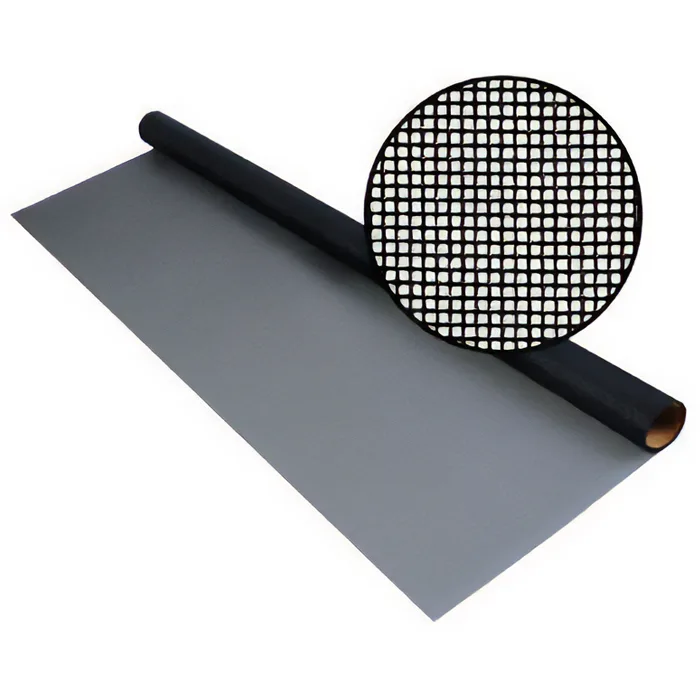
Standard screen mesh stops mosquitoes and flies. It does not always stop the truly tiny insects — midges and no-see-ums — that show up near water and ravines. No-see-um mesh uses a tighter weave that closes the gap. The cost of that tighter weave is slightly reduced airflow, so we recommend it for the doors and windows where tiny insects are actually a problem rather than the whole house.
Choose it when: you’re near water, a ravine or gardens and small insects get through your current screens.
Specialty Metal Mesh: Stainless Steel and Bronze
Beyond the everyday materials, we also carry two specialty metals. Stainless steel mesh is the most durable screen material there is — it resists impacts, pets, corrosion and time, which makes it the pick for high-traffic doors and anyone tired of replacing screens. Bronze mesh is the premium, traditional choice: strong, long-lived, and it weathers to a warm patina that suits heritage homes and copper-accented exteriors beautifully.
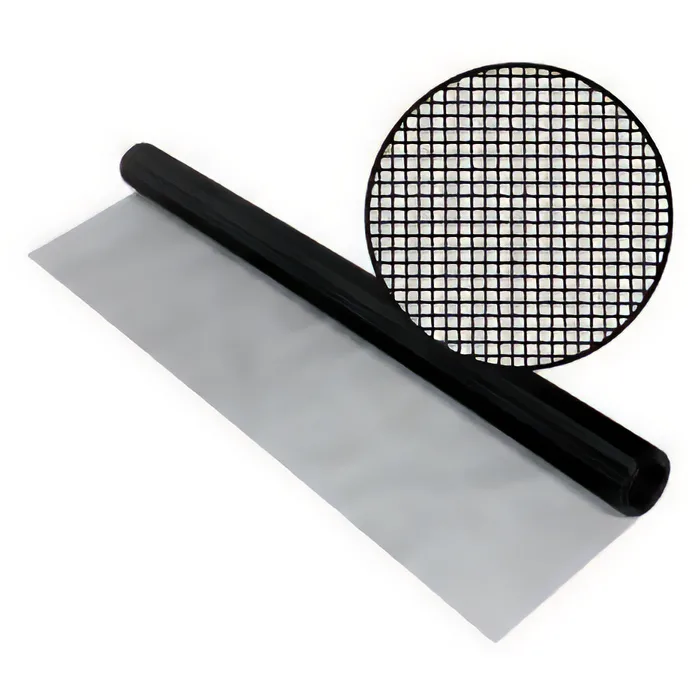
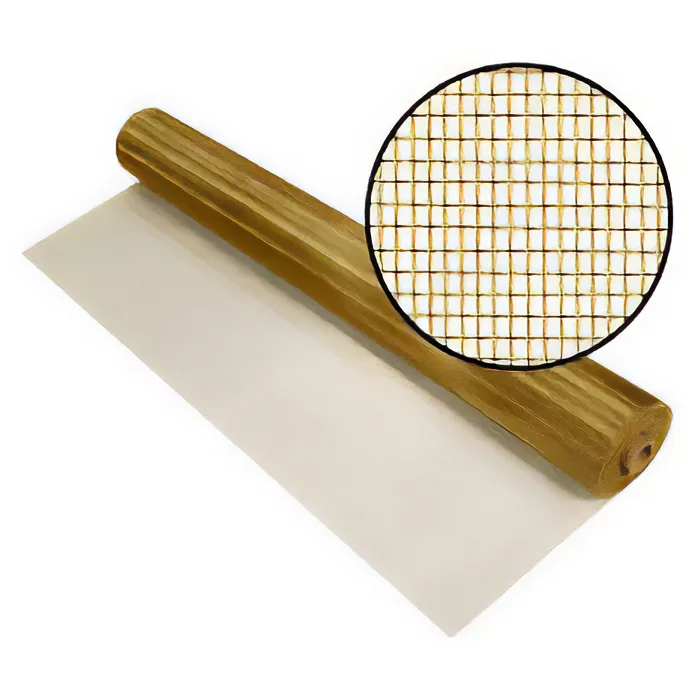
Quick Comparison
- Best value: fibreglass
- Best visibility & airflow: fibreglass (charcoal)
- Best shape retention: aluminum
- Best with pets: pet-resistant polyester
- Best against tiny insects: no-see-um fine mesh
- Most durable overall: stainless steel
- Premium heritage look: bronze
- All of them: installable in your existing door or frame — a re-screen keeps the door, swaps the mesh
The most common mistake is replacing torn fibreglass with more fibreglass in a house with a big dog — we end up back at the same door a year later. The second most common is buying the heaviest mesh “to be safe” for a door where standard charcoal fibreglass would have looked better and moved more air. Match the mesh to the actual problem: our trucks carry standard, heavy-duty and pet mesh, so we can re-screen with the right one on the spot.
Which Mesh Should You Actually Get?
If the door has no pets and the bugs it faces are normal-sized: charcoal fibreglass, and spend the savings on good rollers. Pets: pet-resistant polyester, no hesitation. Near water with tiny biters: no-see-um on the affected openings. Still torn? Tell us about the door — our screen mesh replacement service includes honest advice on which material fits, and the estimate is free. And if the door has bigger problems than mesh, start with our guide on whether to repair or replace it.
We re-screen with standard, heavy-duty, pet and fine mesh — free estimate first.
Get a Free EstimateScreen Mesh FAQs
Can I put pet mesh in my existing screen door?
Yes — any of these meshes installs into your existing door or window frame with new spline. That’s exactly what a re-screen is.
Does pet mesh block the view?
A little. The strands are thicker than standard fibreglass, so you trade some visibility and airflow for durability that claws can’t shred.
What colour mesh is easiest to see through?
Charcoal. It sounds backwards, but darker mesh reduces glare and reads almost transparent from inside — silver-grey mesh reflects light and looks foggier.
Will no-see-um mesh make my room stuffy?
The tighter weave does reduce airflow slightly. On most doors it’s barely noticeable, but that’s why we suggest it only for openings where tiny insects are actually getting through.
How do I know if my mesh needs replacing versus the whole door?
If the frame is straight and only the mesh is torn or sagging, re-screening is the economical fix. Frame damage changes the math — our free estimate covers both options honestly.